Dynamic Pacing for Real-time Satellite Traffic
Stabilizing satellite video calls by adapting WebRTC for LEO networks.
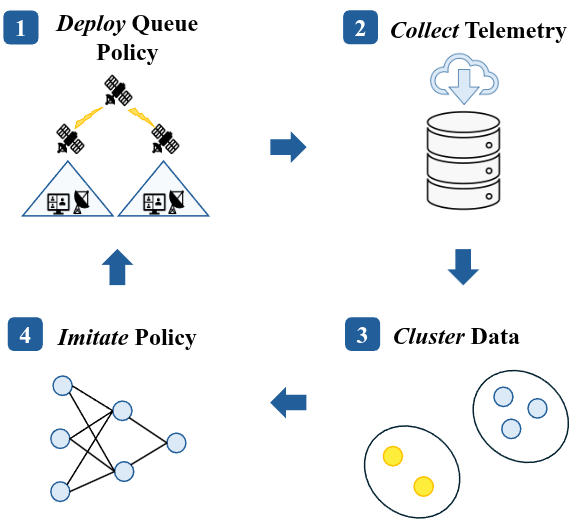
Fig. 1: Our system's workflow: An initial policy is deployed to collect telemetry from user calls. This data is then clustered to build an "expert" policy, which a neural network is then trained to imitate prior to deployment.
Problem & Motivation
Ever experienced frustrating freezes on a video call over satellite internet? While LEO constellations like Starlink are revolutionizing global connectivity, they create a challenging environment for real-time video. The constant, rapid movement of satellites and the frequent handovers between them cause sudden latency spikes and instability. Standard video conferencing tools, designed for stable terrestrial networks, use a rigid "one-size-fits-all" approach for sending data. This static method fails in space—either being too cautious and wasting bandwidth during stable periods or too aggressive during handovers, causing packet loss and a choppy user experience.
Our Approach & Contribution
Our solution was to design a smarter, dynamic system that anticipates and adapts to the satellite network's behavior. Instead of a single static rule, we developed a handover-aware policy that adjusts how it sends video data based on predicted satellite handovers. Using a technique called offline imitation learning, We trained a lightweight Transformer model to mimic an "expert" policy derived from thousands of video call logs. This allows the system to make intelligent decisions in near real-time: it minimizes latency when the connection is stable and prioritizes connection stability during turbulent handover periods.
Results & Impact
This adaptive approach delivered dramatic improvements over the standard WebRTC configuration. In emulated satellite environments, the system achieved up to a 3x boost in video bitrate while cutting the video freeze rate by up to 62%. More importantly, on live Starlink connections, the policy reduced the freeze rate by up to 41% and reduced the mean packet loss by 40%, proving its effectiveness in a real-world setting. These results represent a step towards enabling smooth, high-quality video calls for the growing number of users on LEO satellite networks.
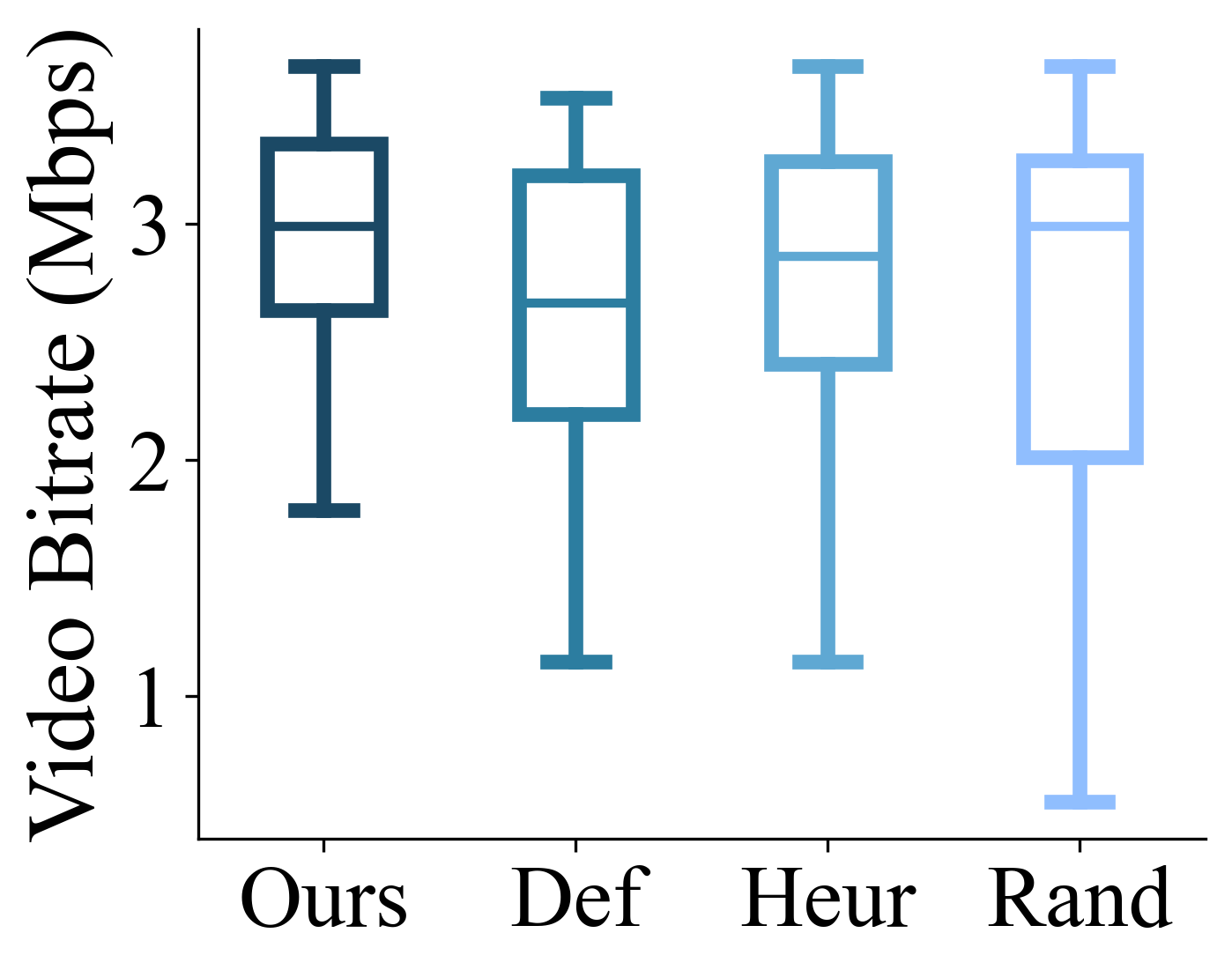
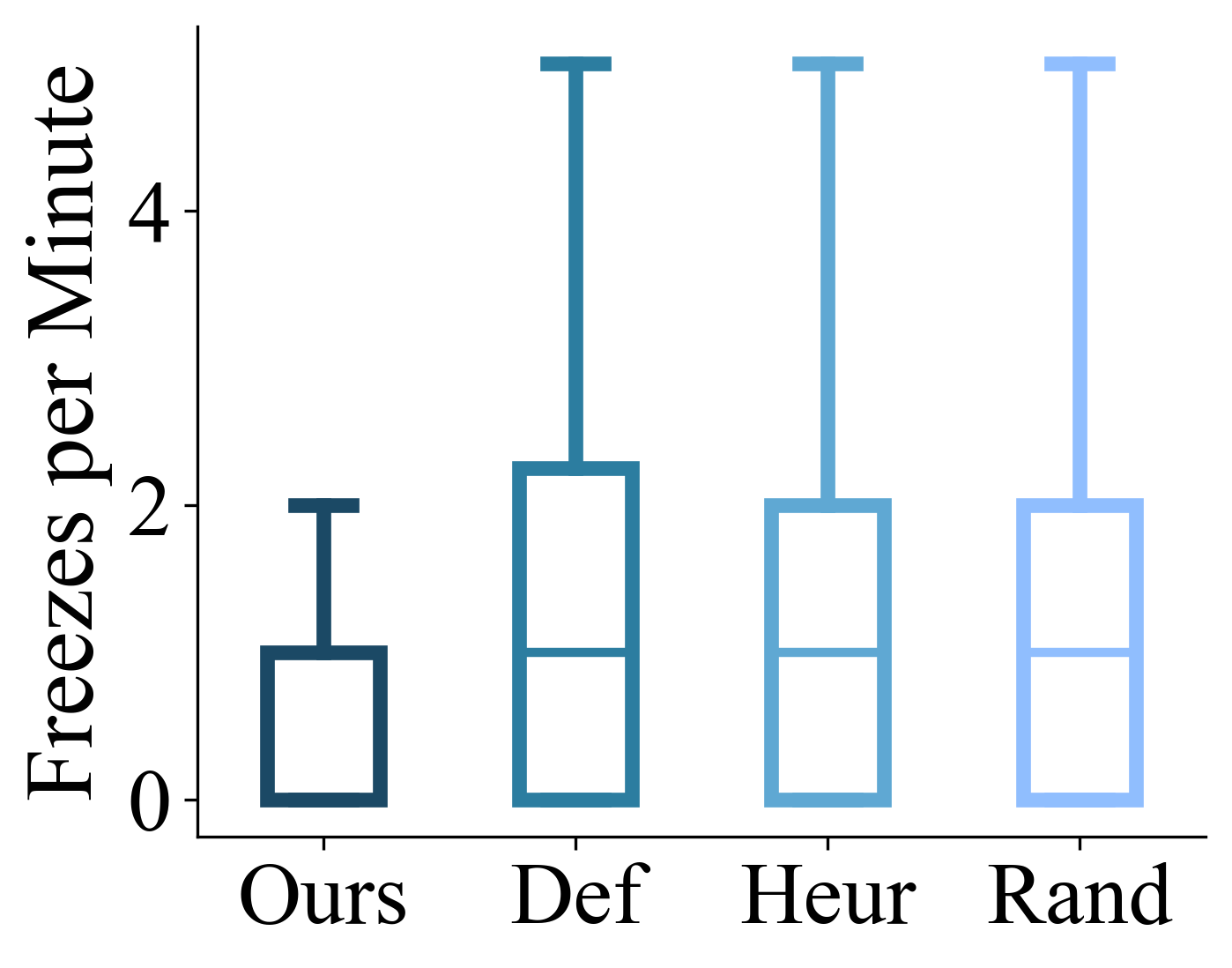
Fig. 2: Video bitrate performance in live Starlink environments, showing our approach ("Ours") maintains higher quality than the default ("Def") and other baselines.
Fig. 3: Our policy significantly reduces the rate of video freezes per minute compared to the default WebRTC policy on live Starlink networks.